
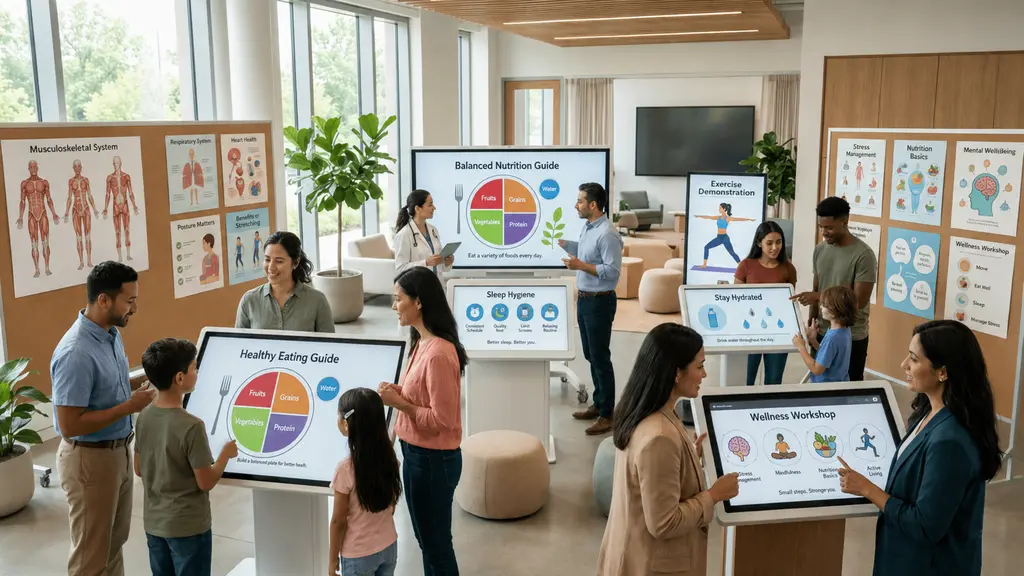
AI Image Generators can support health and wellness education by helping publishers create visual references for information that may be difficult to explain through text alone. Topics such as nutrition, exercise, anatomy, hydration, sleep, and healthy routines can become easier to follow when clear visuals support the written information. For educators, publishers, and wellness content creators, carefully designed images can provide another way to explain ideas.
AI image-generation tools can help develop illustrations, educational graphics, infographics, and supporting visuals. Higgsfield’s AI Image Generator, for example, can be used as part of a creative workflow for producing and refining visual material. In health content, however, generated visuals should remain supporting material. They should not be treated as medical evidence, diagnostic tools, or substitutes for qualified professionals, trusted medical references, or verified photographs and diagrams.
Why Can Visuals Make Health Education Easier to Understand?
Health education ranges from simple daily habits to complex biological processes. A written explanation may describe how the digestive system is organised, how food groups fit into a balanced diet, or how a basic movement is performed, yet some readers may still find the concept difficult to picture.
A supporting visual can provide a useful reference. A simplified illustration may identify major structures, a food graphic can organise broad nutritional categories, and a wellness graphic can show several habits in one routine.
The image should support information already explained in the article. When anatomy, equipment, exercise technique, or other accuracy-sensitive subjects are involved, the visual should be checked against reliable references before publication.
How Can AI Help Turn Complex Wellness Ideas Into Visuals?
Some wellness topics involve several ideas at once. Balanced nutrition is a good example because one section may discuss carbohydrates, proteins, fats, vitamins, minerals, fibre, hydration, and overall dietary variety.
AI image tools can help turn written instructions into visual concepts. A publisher might compare a simple meal illustration with an infographic-style version and choose the format that best fits the audience.
The visual should not introduce new health claims simply because software can generate them. Labels, numbers, nutrient values, and medical statements still require independent verification. AI can assist with presentation, but responsibility for accuracy remains with the people preparing and publishing the content.
What Health Topics Can Benefit From AI Generated Educational Images?
AI-generated imagery may be useful for general subjects such as nutrition, food education, fitness, yoga and stretching, hydration, sleep routines, self-care, personal care, healthy lifestyle habits, preventive health awareness, and basic educational anatomy.
Its usefulness depends on purpose. A decorative hydration illustration carries a different level of risk from a diagram that appears to show exact anatomy or a medical procedure.
For WellHealthOrganic, this can also sit naturally beside broader technology-related wellness coverage. Readers interested in that subject can explore Personalized Health Monitoring: How AI-Powered Wearable Technology is Transforming Healthcare. In every case, the image should complement the article rather than make claims the written content does not support.
How Can AI Support Nutrition Education?
Nutrition is well suited to visual explanation because readers often need to compare several foods or concepts at once. A visual may group foods by broad category, illustrate ingredients used in a recipe, or present a general meal concept more clearly than a long list.
Custom image generation can help publishers create graphics that match an article instead of relying only on generic stock photographs.
There are clear limits. AI-generated food images should not be treated as evidence of exact portion sizes, calorie values, nutrient quantities, or health effects. A realistic-looking plate does not prove its nutrient content or suitability for a particular person. Specific nutritional information should come from credible sources, while personalised dietary questions should be left to appropriately qualified professionals.
Can AI Images Help Explain Fitness and Movement?
Fitness and movement articles can benefit from illustrations when written descriptions are difficult to picture. A stretching article may discuss posture, body position, or direction of movement, and a supporting image can clarify the basic concept.
This is also an area where visual accuracy matters. AI-generated bodies may contain errors in joints, hands, proportions, or movement positions. A polished image can still be unsuitable as an instructional reference.
If an image is intended to demonstrate technique rather than simply illustrate a topic, it should be checked by someone with relevant expertise. AI should support written guidance, not become the sole source of exercise instruction.
How Can AI Make Wellness Articles More Engaging?
Long health articles can be tiring to scan when every section contains only text. Relevant visuals can separate ideas and show readers what a section covers.
An article on healthy routines might use visuals for sleep, movement, hydration, nutrition, and relaxation. These images do not need to be dramatic or medically detailed. Simple visuals are often more appropriate because they keep attention on the educational point.
The same visual may be adapted for a newsletter or social post, but its new context should be reviewed. Cropping, short captions, or missing explanations can sometimes make a general image appear to communicate a stronger health claim than the original article intended.
Can AI Help Create Health Infographics?
Infographics can be useful when several related ideas need to be presented together. Instead of placing every point in a paragraph, publishers can organise information into headings, icons, short labels, and simple explanations.
A general wellness infographic might cover nutrition, movement, sleep, hydration, stress management, and general health awareness. AI can assist with layout and illustration concepts, but the information should still be checked separately.
Design and factual validation are different tasks. A generator may create an attractive layout without knowing whether a number is correct or a recommendation applies broadly. Generated text inside images should therefore be checked carefully before publication.
How Can Health Publishers Keep AI Visuals Accurate?
Accuracy should be considered before publication. AI systems can produce convincing details that are incorrect or unsuitable for the intended context.
Extra review is sensible for anatomy, medical equipment, exercise positions, food labels, nutritional information, body systems, healthcare environments, and procedures. Creators should compare important details with reliable references and correct anything confusing.
Privacy matters too. Identifiable patient photographs, medical records, test results, or other sensitive health information should not be uploaded to an AI service without the necessary authority, consent, and appropriate safeguards. For ordinary educational illustrations, fictional or non-identifiable subjects can reduce privacy risk.
What Role Should Human Experts Play?
AI can assist with visual development, but final judgment remains human. A nutrition professional can review a nutrition graphic when needed. A qualified fitness professional can assess movement imagery, while an appropriate health reviewer can flag visuals that imply a diagnosis, treatment outcome, or unsupported certainty.
Not every wellness illustration requires clinical review. A decorative water-bottle image is different from an anatomical diagram or procedure graphic. Review should be proportionate to the content.
The principle is simple: AI may support the creative process, but people remain responsible for accuracy, context, and the decision to publish.
How Can Publishers Create Consistent Wellness Visuals?
Consistency can make a health website easier to recognise. Nutrition articles might use clean food imagery, fitness pieces simple movement illustrations, and general wellness articles uncluttered educational graphics.
Higgsfield provides image-generation and editing capabilities that creators can incorporate into this kind of workflow. The value is that visual concepts can be developed and refined around the needs of the article.
Consistency should never take priority over accuracy. If an image does not represent the subject responsibly, matching the website’s visual style is not enough reason to publish it.
How Can One Educational Visual Be Used Across Different Channels?
Health information is discovered through articles, newsletters, social posts, short videos, and other formats. A well-planned visual can sometimes be adapted for more than one channel.
A nutrition illustration created for an article might be resized for social media, while a wellness infographic could be adapted for a newsletter. A static image may also become the starting point for a short motion graphic.
Reuse still requires review. A caption that was clear beside a full article may become ambiguous alone, and labels can lose context after cropping. Each version should therefore be checked as its own piece of communication before publication.
What Should Creators Avoid When Using AI for Health Content?
The first mistake is treating realism as proof of accuracy. Generated imagery can look professional while containing incorrect anatomy, misleading labels, unrealistic proportions, or implausible healthcare details.
Creators should also avoid using generated visuals to imply guaranteed treatment results, dramatic before-and-after outcomes, precise weight-loss effects, disease cures, or other unsupported medical conclusions. AI images should not fabricate patient experiences, testimonials, medical records, or clinical evidence.
Another mistake is letting AI replace credible sources. If an article contains a factual health statement, that statement needs an appropriate basis regardless of how attractive the illustration appears. AI is safest when used as a communication and design aid rather than a medical authority.
How Can Readers Benefit From Better Health Visuals?
Well-designed visuals can make unfamiliar information easier to approach. An illustration may introduce a subject, reinforce an idea, or make a long article easier to navigate.
Someone reading about nutrition may find a visual grouping easier to revisit than a dense list. A reader exploring general movement may understand written information more quickly when an illustration appears beside it. A structured wellness graphic can also make several routine habits easier to scan.
The image should remain secondary to reliable information. Its role is to support understanding, not create certainty where evidence is limited or encourage readers to diagnose or treat themselves.
What Could the Future of Visual Health Education Look Like?
Health and wellness publishing increasingly uses text, photography, illustration, animation, and generated media. AI image tools give publishers another option for creating visuals tailored to a specific subject.
The useful question is whether an AI-created image genuinely improves understanding. For some topics, a custom illustration may be appropriate. For others, an established medical diagram, photograph, or written explanation may be safer.
Responsible use depends on choosing the right format, checking important details, protecting privacy, and recognising AI’s limits.
Final Thoughts
Health and wellness education works best when information is clear, practical, and easy to understand. AI image-generation tools can help publishers create supporting illustrations, infographics, lifestyle visuals, and educational concepts, but they should remain part of a wider editorial process.
Health-related visuals deserve additional care because realistic images may be interpreted as factual. Reviewing anatomy, labels, movement positions, and health-related claims helps reduce that risk.
A balanced approach works best: use AI where it makes an explanation clearer, rely on credible information for factual claims, involve appropriate human review when accuracy matters, and choose established medical or photographic resources when they are better suited to the subject.
Disclaimer
This article is provided solely for general informational and educational purposes. It does not constitute medical advice, diagnosis, treatment, professional healthcare guidance, legal advice, or a recommendation to purchase or use any particular product, platform, software, or service. WellHealthOrganic.com and the author are not doctors, healthcare professionals, or licensed medical advisors.
References to AI tools, including Higgsfield and its AI Image Generator, are provided for contextual and informational purposes. Their inclusion does not constitute an endorsement, recommendation, guarantee, certification, ranking, or representation by WellHealthOrganic.com regarding the quality, accuracy, safety, reliability, performance, availability, suitability, legality, pricing, or results of the platform or any service offered through it.
External Links and Third-Party Services
This article may contain links to third-party websites or services. WellHealthOrganic.com does not control and is not responsible for the content, availability, security, privacy practices, terms, policies, pricing, subscriptions, features, representations, or business practices of any external website or service.
Readers should independently review the relevant website, product information, terms of service, privacy policy, pricing, refund or cancellation policy, and other applicable conditions before creating an account, uploading information, making a payment, purchasing a subscription, or otherwise using a third-party service.
Purchases, Payments and Subscriptions
If a reader chooses to purchase, subscribe to, register for, or use Higgsfield or any other third-party product or service mentioned in this article, that decision and any resulting transaction are solely between the reader and the relevant third-party provider.
WellHealthOrganic.com does not guarantee any purchase, subscription, payment, refund, cancellation, account access, customer support response, product availability, service performance, generated output, commercial result, or other outcome connected with a third-party service.
Any pricing, features, subscription conditions, promotional offers, availability, or policies mentioned or accessible through an external website may change without notice. Readers should verify all current information directly with the relevant provider before making any financial commitment.
AI-Generated Content and Health Information
AI-generated health or wellness visuals may contain errors. Use them only as general illustrative material, not as medical evidence or professional instructions. Do not upload identifiable patient information, medical records, test results, or other sensitive health information to any AI service unless you have proper authority, consent, and privacy safeguards.
AI can make mistakes, so readers and publishers should always double-check health-related facts and visuals against reliable sources and, where appropriate, qualified professionals.
No Guarantee or Warranty
WellHealthOrganic.com does not guarantee or warrant, whether express or implied, the completeness, accuracy, reliability, suitability, safety, legality, availability, or continued accuracy of the information in this article or on any linked third-party website.
Do not treat any mention of a company, platform, product, service, feature, or external link as a guarantee that it will suit every user or purpose.
Images
Use the images in this article only as illustrative or educational references unless we expressly state otherwise. Do not interpret AI-generated or illustrative images as depictions of actual patients, medical outcomes, procedures, clinical evidence, or guaranteed results.
Limitation of Responsibility
Readers are responsible for independently evaluating any information, platform, product, service, subscription, or external website before relying on it or making a purchase or other decision.
To the maximum extent permitted by applicable law, WellHealthOrganic.com and the author shall not be responsible for losses, damages, costs, disputes, failed transactions, subscription issues, privacy concerns, inaccurate AI outputs, service interruptions, or other consequences arising from a reader’s independent decision to access, purchase, subscribe to, rely upon, or use any third-party product or service referenced or linked in this article.
For health-related questions or concerns, readers should consult an appropriately qualified healthcare professional.