
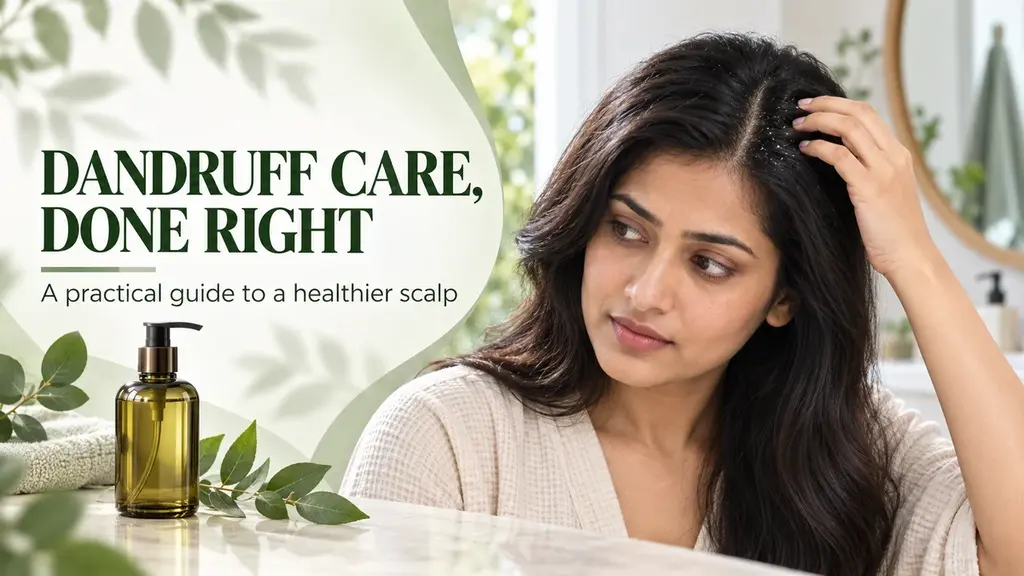
Home remedies for dandruff can help when the problem is mild, but the most reliable place to start is not a complicated kitchen mixture. It is a consistent scalp-care routine and an anti-dandruff shampoo with a suitable active ingredient. The trick is choosing the right product, applying it to the scalp—not just the hair—and giving it enough time to work.
If you are wondering how to get rid of dandruff at home, this guide separates useful steps from popular hacks that can sting, dry or inflame the scalp. It also explains when flakes may be a sign of seborrheic dermatitis, eczema, psoriasis, contact dermatitis or a fungal infection that needs professional care.
Quick answer: For mild dandruff, wash the scalp regularly and use an anti-dandruff shampoo containing an ingredient such as ketoconazole, selenium sulfide, zinc pyrithione, salicylic acid or coal tar. Follow the product label, leave it on for the stated contact time and assess the result over several weeks. Avoid harsh DIY acids or undiluted essential oils.
Important health note: Dandruff is usually harmless and is not contagious. However, a painful, swollen or intensely itchy scalp, patchy hair loss, broken hairs, pus, open sores or persistent symptoms should not be self-treated indefinitely. A doctor or dermatologist can check for another scalp condition.
What Is Dandruff and Why Does It Happen?
Dandruff causes visible flakes on the scalp or in the hair and may come with itching. It is not proof of poor hygiene. Washing habits can make flakes more or less noticeable, but dandruff may also be associated with oily skin, sensitivity to hair products, skin conditions and the way a person’s scalp responds to Malassezia, a yeast that naturally lives on human skin.
People often use “dry scalp” and “dandruff” as if they mean the same thing. They can look similar, but they are not always identical. A dry scalp tends to feel tight and may produce small, dry flakes. Dandruff can occur on an oily scalp and may produce larger or greasier flakes. Self-diagnosis is not always reliable, especially when redness or hair loss is present.
| What you notice | What it may suggest | Sensible next step |
|---|---|---|
| Loose white flakes with mild itching | Common dandruff or a dry scalp | Try gentle cleansing and one suitable anti-dandruff shampoo |
| Greasy flakes with red patches around the scalp, eyebrows or nose | Seborrheic dermatitis | Seek medical advice if it is widespread, uncomfortable or persistent |
| Thick, well-defined silvery scales | Possible psoriasis | Arrange a clinician or dermatologist assessment |
| Burning, redness or blisters after a new dye, spray or gel | Possible contact dermatitis | Stop the suspected product and seek advice if the reaction is significant |
| Scaly patches with broken hairs or patchy hair loss | Possible scalp ringworm (tinea capitis) | Get medical care; shampoo alone may not treat it |
What Are the Best Home Remedies for Dandruff?
The most dependable home remedies for dandruff are evidence-based habits you can safely follow at home: cleanse the scalp regularly, use a properly formulated anti-dandruff shampoo, rinse thoroughly and reduce avoidable irritation. These steps are less exciting than an overnight DIY cure, but they are more likely to help and less likely to cause a reaction.
1. Choose one anti-dandruff active ingredient
Start with one product rather than mixing several treatments on the first day. Common active ingredients work in different ways. Some target yeast, while others help loosen scale or slow excessive skin-cell buildup. Availability and instructions vary by country, so read the entire label and ask a pharmacist if you are unsure which option suits you.
2. Put the treatment on the scalp
Dandruff begins on the scalp, yet many people spread shampoo mainly through their hair. Part the hair if necessary, massage the lather gently onto the scalp with your fingertips and avoid scratching with your nails. If you have curly, coily, colour-treated or chemically treated hair, keeping the medicated shampoo mainly on the scalp may reduce unnecessary drying of the lengths.
3. Respect the contact time
Rinsing immediately can prevent some formulas from doing their job. Depending on the product, the label may tell you to leave the lather on for several minutes before rinsing. Follow that direction exactly. More time is not automatically better and may increase dryness or irritation.
4. Wash according to your scalp and hair type
An oily, straight-haired scalp may need cleansing more often than a dry scalp with coarse, curly or coily hair. There is no universal schedule for everyone. The American Academy of Dermatology advises adjusting shampoo frequency to hair type and tolerance. Conditioner can be used on the hair lengths if the treatment leaves them dry.
5. Reduce buildup without scrubbing
Heavy pomades, dry shampoo, styling wax and repeatedly applied oils can leave residue on the scalp. If you notice that a product makes itching or flakes worse, pause it and simplify your routine. Use the pads of your fingers rather than sharp combs, scalp scrapers or fingernails. Vigorous scrubbing can inflame skin that is already irritated.
6. Protect the scalp when using coal tar
Coal-tar shampoo can make the scalp more sensitive to sunlight. If you use it, follow the product warning and protect exposed scalp with shade or a suitable hat. People with thinning hair can ask a dermatologist or pharmacist about scalp-friendly sun protection.
Which Anti-Dandruff Shampoo Ingredient Should You Choose?
Do not shop by the biggest “natural” or “instant clean” claim on the front of the bottle. Turn it around and check the active ingredient. The following table is a selection guide, not a prescription.
| Active ingredient | Why it may be used | Important caution |
|---|---|---|
| Ketoconazole | Antifungal action; often chosen when yeast-related dandruff is suspected | Use only as labelled; ask a pharmacist or clinician if pregnant, breastfeeding or treating a child |
| Selenium sulfide | Helps control yeast and excessive flaking | Rinse thoroughly; follow warnings for coloured or chemically treated hair |
| Zinc pyrithione | Used in some anti-dandruff formulas to reduce yeast and flakes | Product availability differs by country; follow local label directions |
| Salicylic acid | Helps loosen and remove scale | May feel drying or irritating on a sensitive scalp |
| Coal tar | Slows rapid skin-cell turnover and helps with scaling | May affect hair colour or increase sun sensitivity |
| Sulfur | Included in some products to help reduce scaling | Can be drying and has a noticeable odour in some formulas |
If the first well-used product does not help, a pharmacist or dermatologist may suggest an ingredient with a different action. Do not layer several medicated shampoos or scalp acids together unless a healthcare professional has told you how to do so.
Do Natural Home Remedies for Dandruff Actually Work?
Natural does not automatically mean gentle, and “home remedy” does not mean risk-free. Evidence for many viral home remedies for dandruff is weak, indirect or based on a finished cosmetic formula rather than the raw ingredient used in a kitchen. A product may also contain preservatives and carefully controlled concentrations that make it very different from a homemade mixture.
Tea tree oil
A small randomized controlled trial found improvement with a commercially prepared 5% tea tree oil shampoo. That does not prove that adding an unmeasured number of essential-oil drops to a bottle at home is safe or equivalent. Undiluted tea tree oil can irritate skin or trigger allergic contact dermatitis, and it must never be swallowed. If you want to try it, choose a properly formulated shampoo, patch test as directed and stop if burning or rash develops.
Coconut oil
Coconut oil can reduce friction and help dry hair feel softer, which is why it appears in many traditional hair-care routines. However, it is not a proven cure for dandruff. On an oily or buildup-prone scalp, heavy overnight oiling may feel worse or make it harder for medicated shampoo to reach the skin. If you use oil for the hair lengths, keep the amount modest and observe how your scalp responds.
Aloe vera
Aloe vera may feel cooling, but evidence that fresh gel treats dandruff is limited. Raw plant material can contain irritants, and fragranced aloe products may also cause reactions. Do not apply it to broken or oozing skin. A soothing sensation should not be confused with treatment of the underlying cause.
Lemon juice and apple cider vinegar
Both are acidic and can sting scratched or inflamed skin. Homemade dilution is inconsistent, and there is not strong clinical evidence that either one reliably clears dandruff. Never combine them with other irritating treatments, and do not use them as substitutes for medical care.
Baking soda, onion juice, curd and neem paste
These remedies are widely shared, but reliable evidence for routine dandruff treatment is insufficient. Baking soda is alkaline and abrasive; onion juice can irritate; curd can be messy without treating the cause; and plant pastes can cause allergy or contamination. We do not recommend putting these mixtures on a sore, cracked or undiagnosed scalp.
How Can You Get Rid of Dandruff at Home Safely?
A four-week routine is a practical way to judge whether a simple dandruff treatment at home is helping. Four weeks is not a promise of a cure; it is a reasonable review point used in public health guidance.
Before you begin
- Take note of where the flakes occur and whether you have redness, pain, sores or patchy hair loss.
- Stop any newly introduced dye, spray, fragrance or styling product if symptoms began soon after using it.
- Choose one anti-dandruff shampoo suitable for your age, hair type and local product guidance.
- Photograph the same small area in similar lighting if you want an objective way to compare progress.
Weeks 1 and 2: Focus on technique
Use the shampoo at the frequency and contact time printed on its label. Apply it to the scalp, rinse well and avoid introducing several DIY treatments at once. If the scalp burns, swells or develops a rash, stop the new product. A mild cosmetic tingle is not proof that a treatment is “working.”
Weeks 3 and 4: Review the pattern
Look for a meaningful reduction in flakes and itching rather than expecting a perfectly flake-free scalp overnight. If there is no improvement after correct use, ask a pharmacist about a different active ingredient or speak to a dermatologist. The NHS recommends seeking medical advice when symptoms persist after at least four weeks of anti-dandruff shampoo, or sooner if the scalp is very itchy, red or swollen.
After symptoms improve
Dandruff often returns. Some people need periodic maintenance, while others only treat a flare. Follow the product label or a clinician’s plan rather than using a strong formula every day indefinitely. Keep a simple note of weather, stress, styling products and wash frequency; patterns are more useful than guessing.
How to Use Home Remedies for Dandruff Safely?
Home remedies for dandruff should be introduced one at a time. This makes it easier to identify which step is helping and which product may be causing dryness, itching or irritation.
What Common Dandruff Mistakes Can Make Flaking Worse?
- Changing treatments every few days: It becomes impossible to know what helped or caused irritation.
- Applying shampoo only to the hair: The active ingredient needs contact with the scalp.
- Scratching flakes off: This can injure the skin and increase inflammation.
- Using very hot water: Hot water may aggravate dryness and discomfort.
- Assuming more product works faster: Overuse can irritate without improving the result.
- Heavy oiling during an oily flare: Oil may add buildup and does not replace antifungal treatment.
- Ignoring the label: Contact time, frequency and safety warnings differ between ingredients.
- Treating every flaky scalp as dandruff: Psoriasis, eczema, ringworm and product reactions need different care.
Can Dandruff Cause Hair Loss?
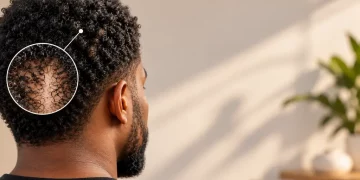
Ordinary dandruff is not generally considered a cause of permanent baldness. However, persistent inflammation and forceful scratching can contribute to temporary shedding or breakage. Patchy hair loss, broken hairs, tender lumps or a spreading scaly rash are not signs to manage with kitchen remedies. They can occur with scalp ringworm or another condition and deserve prompt medical assessment.
If your main concern is thinning rather than flakes, read our separate guide to hair-growth and scalp-care habits, but avoid assuming that a hair-growth remedy will also treat dandruff.
When Should You See a Dermatologist?
Stop relying only on home remedies for dandruff and seek professional advice if:
- symptoms have not improved after about four weeks of correctly used anti-dandruff shampoo;
- the itch is severe, interferes with sleep or causes bleeding from scratching;
- the scalp is painful, very red, swollen, hot, crusted, oozing or has pus;
- you notice patchy hair loss, broken hairs or a ring-shaped rash;
- flaky or itchy patches also affect the eyebrows, ears, face, chest or other areas;
- symptoms started after hair dye or another product and include swelling or blisters;
- you have a weakened immune system or a known chronic skin condition; or
- you are uncertain whether the problem is dandruff at all.
Seek urgent medical help for facial or throat swelling, trouble breathing, faintness or a rapidly worsening widespread reaction after using a product.
Can Children Use the Same Dandruff Remedies?
Do not automatically use an adult medicated shampoo, essential oil or scalp acid on a baby or child. Infant cradle cap is not managed in exactly the same way as adult dandruff, and scalp ringworm is more common in children than many parents realise. Ask a pediatrician, pharmacist or dermatologist which product and schedule are appropriate for the child’s age and symptoms, especially when hair loss, swelling, pain or broken skin is present.
Frequently Asked Questions
Can home remedies for dandruff remove it permanently?
Dandruff can often be controlled, but it may return because scalp oil, yeast, weather, stress and individual skin sensitivity can change over time. A consistent maintenance routine may reduce flares. Be cautious of any product or recipe promising a permanent, one-wash or guaranteed cure.
Should I wash my hair every day if I have dandruff?
Not everyone needs daily washing. People with an oily scalp and straight or fine hair may benefit from washing more often, while curly, coily or very dry hair may tolerate less frequent shampooing. Follow the medicated product label and adjust based on comfort, hair type and professional advice.
Is oiling good or bad for dandruff?
Oil can condition dry hair lengths, but heavy scalp oiling is not a proven dandruff treatment and may worsen greasy buildup for some people. If you enjoy oiling, use a small amount, avoid broken skin and stop if itching or flakes increase. Do not let oil replace an appropriate anti-dandruff shampoo.
Does lemon remove dandruff?
There is not strong clinical evidence that lemon juice reliably treats dandruff. Its acidity may sting scratches, irritate sensitive skin and make inflammation worse. Applying it in sunlight can create additional skin risks. A formulated anti-dandruff product is a safer first choice than concentrated lemon juice.
Does curd help with dandruff?
Curd may make hair feel conditioned, but that does not establish it as a treatment for dandruff or seborrheic dermatitis. Homemade mixtures vary and can leave residue. If your goal is to reduce flakes and itch, begin with regular cleansing and a labelled anti-dandruff shampoo.
Is dandruff contagious?
No. Common dandruff cannot be caught from another person. However, scalp ringworm can spread and may resemble dandruff, particularly when there are round scaly patches, broken hairs or patchy hair loss. Those signs need medical evaluation rather than shared combs or home mixtures.
Can stress make dandruff worse?
Stress may worsen dandruff for some people, although it is not the only cause. Sleep, weather, illness and changes in hair products may also affect flares. Stress management can support general wellbeing, but it should complement—not replace—appropriate scalp treatment.
How long does anti-dandruff shampoo take to work?
Some people notice less itching or flaking sooner, but a fair assessment may take several weeks of correct use. Public health guidance suggests reviewing the result after about four weeks. Seek advice earlier if symptoms are severe or if the product causes burning, swelling or a rash.
Final Thoughts
The safest home remedies for dandruff are usually simple: clean the scalp at a suitable frequency, choose one proven anti-dandruff ingredient, use it exactly as directed and avoid scratching or harsh DIY mixtures. Give a sensible routine time to work, but do not let the word “dandruff” delay care for redness, pain, infection signs or patchy hair loss.
A calm, consistent plan beats a crowded bathroom shelf. If one ingredient is not helping after correct use, a pharmacist or dermatologist can help you change course without turning your scalp into an experiment.
References
- American Academy of Dermatology Association: How to treat dandruff
- NHS: Dandruff—symptoms, self-care and when to get help
- Satchell AC et al.: Treatment of dandruff with 5% tea tree oil shampoo
- Borda LJ and Wikramanayake TC: Seborrheic dermatitis and dandruff—A comprehensive review
Medical and Editorial Disclaimer
This article is provided solely for general informational and educational purposes. It does not constitute medical advice, diagnosis, treatment, professional healthcare guidance or a recommendation to purchase or use any particular product, medicine, supplement or service. WellHealthOrganic.com and the author are not doctors, healthcare professionals or licensed medical advisers.
The information is not a substitute for an examination or personalised advice from a qualified doctor, dermatologist, pediatrician or pharmacist. Do not use this article to self-diagnose a scalp condition, delay needed care, or start, stop or change a prescribed treatment. Product formulas, warnings and availability differ by country; always read the current label and follow local professional guidance.
Individual causes, allergies, hair types, health conditions and responses vary. No particular outcome is promised or guaranteed. A shampoo, oil, plant ingredient or home-care step that one person tolerates may be ineffective or irritating for another. A patch test can reduce uncertainty but cannot guarantee that a reaction will not occur. Stop a new product if it causes burning, rash, swelling, blistering or worsening symptoms.
Babies, children, pregnant or breastfeeding people, anyone with broken or infected skin, and people with chronic skin conditions or a weakened immune system should seek professional advice before using medicated shampoos, essential oils or DIY preparations. Seek urgent medical help for trouble breathing, faintness, facial or throat swelling, or a severe and rapidly worsening reaction.
External links are included for additional context and were selected from health organisations and research databases available at the time of writing. WellHealthOrganic.com does not control external content, which may be updated. Any illustrative image used with this article may be AI-generated and is for educational presentation only; it is not a diagnostic image and should not be used to identify a medical condition.