
If you haven’t visited a dentist in a few years, you might be surprised by how much things have changed. Gone are the days of biting down on messy, gooey clay to get a mould of your teeth. In 2026, Invisalign Singapore treatments increasingly use digital tools such as AI and 3D scanners to support assessment and planning.
For many Singaporeans, the biggest worry about braces is the time commitment. We are all busy, and nobody wants to spend two years waiting for results. Thankfully, new technology is changing the game.
The End of Messy Moulds: iTero 5D Scanners
Today, many clinics in Singapore now use the iTero 5D scanner. Instead of putty, the dentist uses a small handheld wand to take thousands of tiny photos of your teeth in seconds. These photos are stitched together to create a detailed 3D digital model of your mouth.
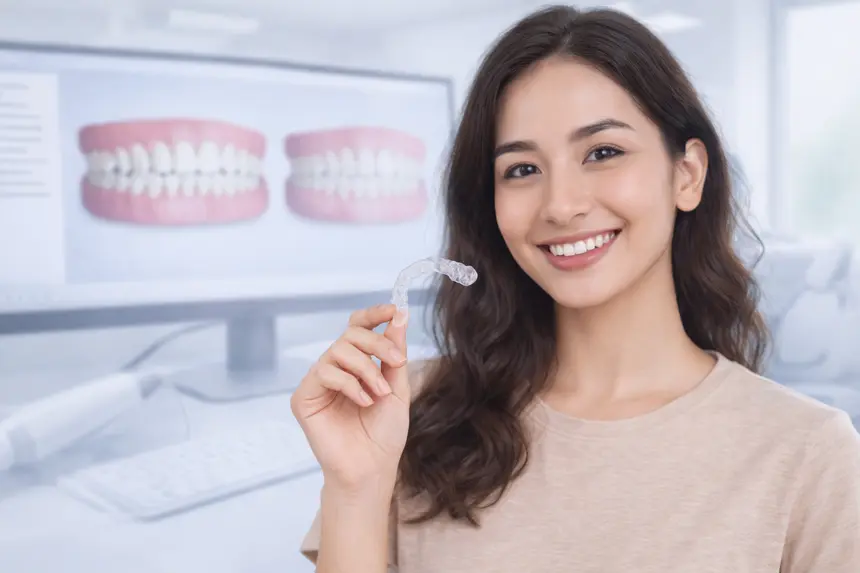
One commonly used feature is the Invisalign Outcome Simulator. Within minutes of your scan, the software may provide a “Before and After” style preview. It can offer a visual illustration of how teeth might move over time based on digital modeling. This helps individuals better understand the planning process.
How AI Plans Your Smile
In 2026, Invisalign uses a massive database of over 15 million successful cases to power its AI. When your dentist sends your 3D scan to the lab, the AI software assists clinicians in reviewing potential tooth movement paths based on digital models.
- Higher Precision: AI software helps clinicians review digital models during the planning process. It may assist in identifying potential adjustments based on available datasets.
- Treatment Planning: AI tools help organize digital tooth-movement simulations, but actual treatment duration varies for each individual and depends entirely on clinical evaluation.
- Fewer Refinements: In the past, many patients needed extra “refinement” trays at the end. With better AI planning, some clinicians note that digital planning tools can help them review tooth-movement simulations more closely, though individual experiences vary.
- Remote Monitoring: Less Time in the Dental Chair
A notable development in 2026 is the growing use of AI-supported remote monitoring. Many Singapore clinics now provide an app where you can take “selfies” of your teeth using a special scan box.
The AI checks your progress and alerts your dentist if everything is on track. If the monitoring software shows expected progress, your dentist may advise you when it is appropriate to move to the next tray. The frequency of in-person reviews will depend on clinical discretion, and remote monitoring simply serves as a supplementary tool to support the evaluation process.
Faster Turnaround Times
Because everything is digital, submissions are processed electronically, which may help streamline timelines. In 2026, many systems have improved compared to earlier years. However, manufacturing and delivery times still vary, and some cases may be processed more quickly depending on operational factors.
Is it Worth It?
While this technology may appear advanced, it is commonly used to support the planning process. Invisalign Singapore tech, including digital tools such as 3D smile design, can offer visual illustrations that may help individuals understand how their treatment is being planned. Treatment plans are created using digital modeling along with the clinical assessment of a licensed professional.
Individuals interested in Invisalign can speak with a licensed dental professional to learn more about the tools and processes used during planning and monitoring.
Disclaimer
This article is created for general informational and educational purposes only. It may reference AI tools, digital technologies, 3D simulations, or automated systems; however, such references are descriptive and not guarantees of accuracy, performance, outcomes, or suitability. AI technologies, dental tools, scanners, aligner systems and digital planning methods vary widely and must always be interpreted by a licensed dental professional.
We are not dentists, orthodontists, medical professionals, or licensed consultants. Nothing in this article constitutes medical advice, diagnosis, treatment guidance, professional evaluation, or personalized consultation. The information presented must not be used to make medical decisions, start or stop any treatment, modify aligner schedules, or replace an in-person clinical examination.
No dentist, clinic, brand, service, device, technology, or location mentioned directly or indirectly is being promoted, endorsed, compared, or recommended. All descriptions of procedures, tools, digital models, or monitoring systems are general explanations only and must not be interpreted as promises of effectiveness, accuracy, safety, predictability, faster results, reduced visits, or improved outcomes. Individual treatment results vary and depend entirely on clinical assessment by a licensed professional.
Readers should always consult a qualified and licensed dental practitioner for advice tailored to their specific oral health conditions. This article does not establish any doctor–patient relationship, consultation relationship, or professional obligation of any kind.
All images used in this article are illustrative references only. They do not depict real procedures, clinics, outcomes, equipment accuracy, software performance, or actual treatment scenarios.
By reading or acting upon this article, you acknowledge and agree that all health-related decisions are your sole responsibility. WellHealthOrganic.com, its authors, and its publishers shall not be held liable for any consequences, loss, harm, misunderstanding, or damages arising from the use, misuse, or interpretation of the information provided.
External links, if included, are provided strictly for general informational reference. Their presence does not imply verification, endorsement, accuracy, safety, professional association, or suitability of any external service, product, or clinic.
Brand names, product names, scanners, software systems, and aligner technologies mentioned in this article are referenced strictly for descriptive and informational context. Their mention does not imply affiliation, authorization, partnership, endorsement, sponsorship, certification, or official representation of any kind.