
A bowl of dal, a serving of bhindi and a whole-wheat roti may already be part of your lunch. If you’re looking for foods for gut health, start there. The easiest change might be adding a vegetable to the meal you already cook or choosing a whole fruit with your afternoon chai.
Quick answer: Everyday Indian foods for gut health include dals and beans, vegetables, whole fruits, oats, whole-wheat atta and millets such as bajra. These foods provide fibre. Plain dahi can add variety if you tolerate dairy. Start with one change, such as adding a serving of sabzi to lunch. Increase fibre gradually and drink water regularly.
What Are Good Indian Foods for Gut Health?
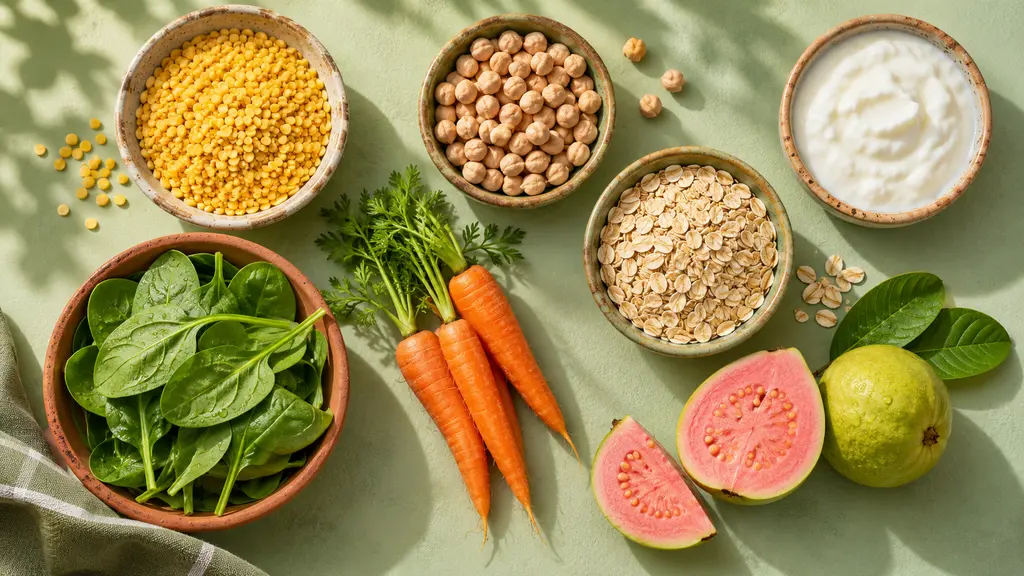
Start with foods you already buy and cook. Pulses, whole grains, vegetables and whole fruits give you several ways to add fibre without planning a separate menu. The ICMR–NIN Dietary Guidelines for Indians recommend a varied diet that includes these food groups.
| Food group | Indian kitchen examples | Easy way to add it |
|---|---|---|
| Pulses | Moong dal, masoor dal, chana, rajma | Serve a bowl of dal with your usual lunch or add cooked chana to chaat. |
| Whole grains and millets | Whole-wheat atta, oats, bajra | Try oats at breakfast or rotate whole-wheat roti with bajra rotla. |
| Vegetables | Bhindi, carrots, green peas, palak | Add peas and carrots to poha or serve a side of sabzi with dal and rice. |
| Whole fruits | Guava, pear, orange | Have a whole fruit as a snack instead of pouring a glass of juice. |
| Fermented dairy | Plain dahi | Serve it with lunch if you tolerate dairy. Get fibre from the plant foods on your plate. |
How Can You Improve Gut Health Naturally With Everyday Meals?
Pick one meal you eat most days and make one change you can repeat. If lunch is usually dal and rice, add a vegetable side. If breakfast is poha, stir in peas and carrots. If you regularly have juice, try a whole orange instead. Once that change feels routine, add variety by rotating the dals, vegetables and fruits you buy.
Rice can stay on the plate. Pairing your usual rice with dal and sabzi is a practical place to start if you don’t want to switch grains. If you enjoy roti, whole-wheat atta or bajra gives you another option. Use whichever fits what your household already cooks.
Is Dahi Good for Gut Health?
Plain dahi is a fermented dairy food that can fit into a varied diet if you tolerate it. Some fermented foods contain live microbes, but the NIH Office of Dietary Supplements explains that fermented foods do not automatically qualify as probiotics with a proven benefit. If you skip dairy, you can still get fibre from dal, beans, vegetables, fruits and whole grains.
Do Idli and Dosa Count as Probiotic Foods?
Idli and dosa are made with fermented batter, but steaming and cooking can kill the live microbes from fermentation. That’s why it’s better to describe them as foods made with fermented batter rather than count on the finished dish as a probiotic source. If you enjoy them for breakfast, sambar is an easy way to add dal and vegetables to the same meal.
What Does a Day of Gut-Friendly Indian Meals Look Like?
Here’s one sample day using familiar foods. Swap dishes based on what’s in season, what you enjoy and what agrees with you.
- Breakfast: Vegetable poha with peas and carrots, or idli with vegetable sambar.
- Lunch: Moong dal, rice or whole-wheat roti, and bhindi sabzi. Add plain dahi if you like it and tolerate it.
- Snack: A guava, pear or orange.
- Dinner: Moong dal khichdi with vegetables, or bajra rotla with a dal and sabzi.
Can Adding More Fibre Cause Gas or Bloating?
It can, especially if you add several fibre-rich foods at once. The National Institute of Diabetes and Digestive and Kidney Diseases recommends increasing fibre little by little and drinking enough fluids. Try adding a side of cooked vegetables first. You can introduce more beans or whole grains later instead of changing your entire menu in one day.
For more everyday ideas, see our Hindi guide on simple ways to support digestion.
Frequently Asked Questions
What is one simple Indian meal for gut health?
Try dal, a cooked vegetable and whole-wheat roti or rice. The dal and vegetables contribute fibre, and whole-wheat roti adds another source if you choose it. This is an easy combination to rotate. For example, swap moong for masoor dal, or replace bhindi with carrots and peas.
Do You Need a Probiotic Supplement for Gut Health?
There is no general recommendation that healthy people take probiotic supplements. The NIH notes that effects can vary by the specific probiotic and the reason for taking it. If you’re considering one for ongoing digestive symptoms, speak with a qualified healthcare professional before choosing a product.
Medical and Editorial Disclaimer
We are not doctors or licensed healthcare professionals. This article is for general information and education only. It does not provide medical advice, diagnosis or treatment.
Food tolerance and dietary needs vary. If you have ongoing digestive symptoms, a diagnosed digestive condition, food allergies or a prescribed diet, consult a qualified doctor or registered dietitian before making significant dietary changes or taking supplements. Do not use this article to diagnose a condition, change prescribed treatment or delay medical care.
We do not guarantee any health outcome from the foods or habits discussed. To the extent permitted by applicable law, WellHealthOrganic.com is not responsible for harm or loss resulting from using this article in place of professional medical advice.