
If your water bottle holds 750 mL, two refills from empty give you 1.5 litres altogether. The same advice to drink “eight glasses” can mean 1.6 litres or 2 litres, depending on the glass. So how much water should you drink a day, and do drinks like chai or chaas count? Start by looking at the size of your glass and what you drink throughout the day.
Quick answer: India’s ICMR–National Institute of Nutrition gives about 2 litres of fluids a day as a general guide for healthy people, including beverages. That’s about eight 250 mL glasses. You may need more in very hot weather or during vigorous activity because you lose more water through sweat. The 2 litres is a guide, and it includes what you drink besides plain water.
Source: ICMR–National Institute of Nutrition, Dietary Guidelines for Indians, Guideline 14.
How Much Water Should You Drink a Day in Litres?
About 2 litres is a useful reference for a healthy adult reading Indian dietary guidance. Think of it as a way to understand your daily water intake, rather than an amount you have to finish by bedtime. A day spent indoors and a day spent working in the sun can feel very different, and your fluid needs can differ too.
How Many Glasses or Bottles Make 2 Litres?
Two litres equals 2,000 mL. If your glass holds 250 mL, eight glasses make 2 litres. If it holds 200 mL, you would need ten glasses to reach the same amount. Check the capacity printed on your bottle, or use a measuring jug once to see how much your usual glass holds.
| Container size | Amount that makes 2 litres |
|---|---|
| 200 mL glass | 10 glasses |
| 250 mL glass | 8 glasses |
| 500 mL bottle | 4 full bottles |
| 750 mL bottle | 2 full bottles plus 500 mL |
| 1 litre bottle | 2 full bottles |
Do Chai, Coffee and Chaas Count Towards Daily Fluid Intake?
Yes. Tea, coffee and milk contribute to fluid intake, and drinks such as chaas also add to what you drink during the day. For example, a 500 mL bottle of water, a 150 mL cup of chai and a 200 mL glass of chaas add up to 850 mL of drinks. Plain water is an easy everyday choice because it contains no added sugar.
The NHS guide to water, drinks and hydration also explains why the daily fluid guide includes drinks such as tea and coffee.
Do You Need More Water in Hot Weather or When You Exercise?
You may need more fluids when it is very hot or when vigorous activity makes you sweat. A short walk in the evening and a long outdoor workout in the afternoon are different situations. If you know you will be outside for a while, take a bottle so you have something to drink along the way.
Looking for a practical walking routine? See our guide to how many steps to walk a day.
How Can You Remember to Drink Water During a Busy Day?
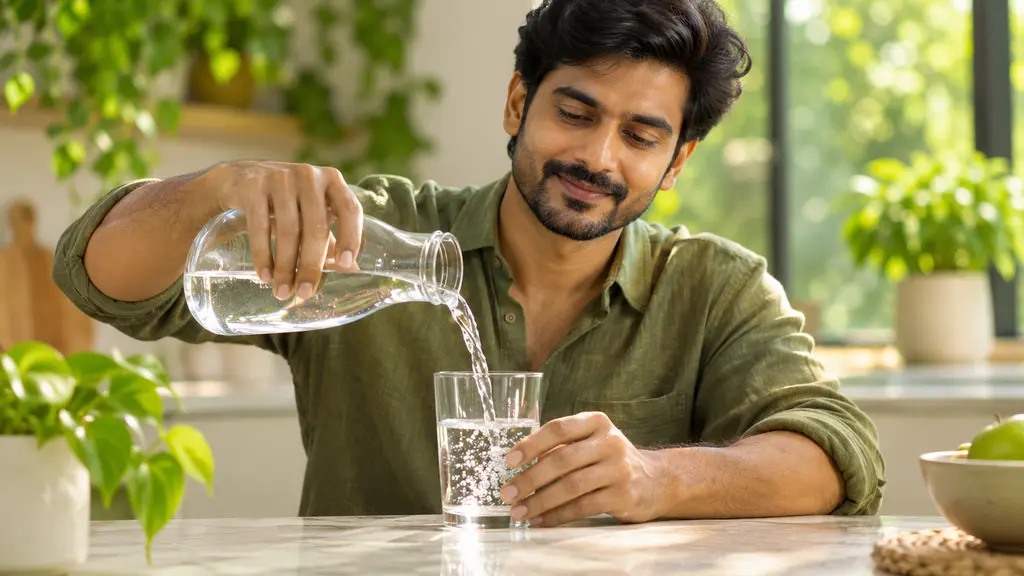
Keep water where you will see it. Put a glass near your lunch plate, leave a bottle on your desk, or carry one when you leave home. If you often get to the afternoon and realise you have barely had a drink, try linking a water break to something you already do, such as finishing lunch or starting your commute.
Is It Necessary to Drink 2 Litres of Plain Water on Top of Other Drinks?
No. The Indian dietary guideline’s rough 2 litre figure includes beverages. If you drink water, milk and tea during the day, the fluid in those drinks already contributes to your intake. The easiest way to use the guideline is to know your container size, count the drinks you actually have and remember that hotter or more active days can change your needs.
Medical and Editorial Disclaimer
This article is for general educational purposes and is intended for healthy adults. Well Health Organic is not a medical provider. The information on this page does not replace advice from a qualified doctor or other healthcare professional.
The fluid amounts in this article are general guidelines, not personal targets. Consult your doctor before changing your fluid intake if you have a medical condition, take medicines that affect fluid balance, or have been advised to limit your fluids. Always follow the instructions given by your healthcare team.
Readers are responsible for deciding how to use this information. To the extent permitted by applicable law, Well Health Organic is not responsible for harm, loss, or other consequences resulting from reliance on this article as a substitute for professional medical advice.