
Has caffeine become a part of your life you can’t imagine living without? Do you also depend on energy drinks to push through the day? Or maybe you’re constantly tired but want to avoid both caffeine and sugary energy drinks altogether?
Caffeine gives a quick energy boost, but it doesn’t work well for everyone. So, what can you do when your energy crashes? How do you stop feeling tired, unmotivated, or just plain sluggish? You’ve probably asked yourself these questions more than once.
You must have heard, “Drink more water, it helps.” But let’s be honest, do you actually do it? Many times, you blame your busy schedules and forget to hydrate properly. But what if water could do more than just hydrate you? What if it could actually support your energy levels, too?
That’s where hydrogen water comes into the picture. It is gaining attention in research discussions related to hydration and cellular processes. In this write-up, you’ll discover how it works and why it is trending. Keep reading; It is an area of ongoing scientific interest.
Water, But Smarter—A Look at Hydrogen Water
Let’s break it down simply. Regular water is what you know as H₂O. That means each water molecule has two hydrogen atoms bonded to one oxygen atom. It is stable, does its job, and keeps you hydrated, something your body needs.
But here’s where hydrogen water steps in with a twist.
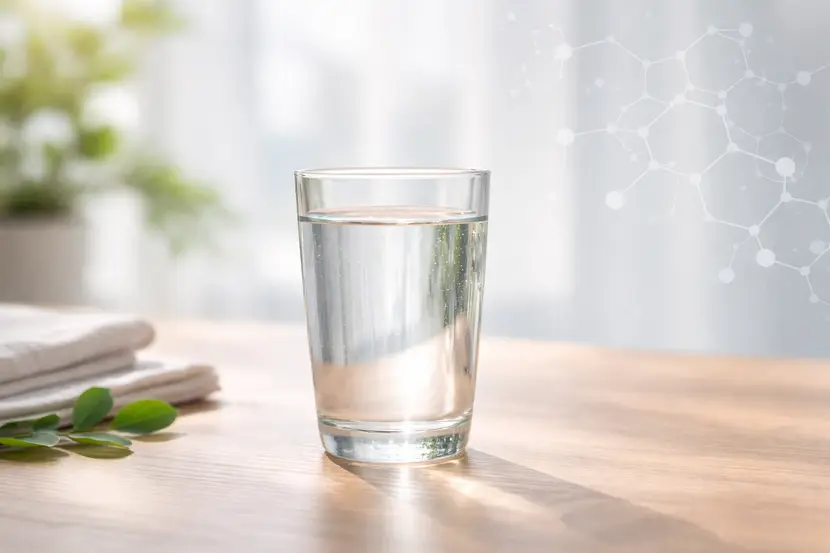
Hydrogen water is basically regular water that’s been infused with extra molecular hydrogen gas (H₂). This added hydrogen isn’t chemically stuck to oxygen, it just floats around freely in the water, kind of like how bubbles are dissolved in soda.
Now, it still looks, tastes, and smells just like your everyday water. But the real difference? Those free-floating hydrogen molecules. They have been studied in laboratory settings for their potential interaction with oxidative stress pathways, a condition linked to fatigue, aging, and certain health issues.
So in short, regular water hydrates. Hydrogen water hydrates, and some early research has explored whether it may have additional physiological effects. That’s why people are starting to pay attention to it.
Now that you know the difference between regular and hydrogen water, let’s dive deeper. You will see why some researchers are exploring whether hydrogen water may influence cellular energy processes.
How Hydrogen Water Could Power Up Your Day
You’ve probably read in school that your cells make energy. Yes, just like you, your cells also breathe. This process turns glucose from your food into a chemical called adenosine triphosphate (ATP), your body’s energy currency.
Remember, ATP is what powers everything inside you. Don’t worry, we’re not diving into a science class here. It’s just a quick recap to connect the dots. Why? Because this is where hydrogen water plays a role. It has been explored in laboratory research for its possible association with cellular energy processes, as explained below:
H2 Water and Mitochondrial Research – The Powerhouse of The Cell
As you know, your cells have tiny power stations inside them called mitochondria. These are where energy is produced. When your mitochondria work well, your brain and body feel active, focused, and balanced.
Now, here’s where hydrogen water comes into play.
Molecular hydrogen in hydrogen-infused water has been studied for its potential interaction with cellular oxidative processes under experimental conditions. One area of research has examined its potential relationship with oxidative stress pathways under controlled experimental conditions. These free radicals can damage mitochondria over time, slowing down your energy production.
Some laboratory research has examined whether molecular hydrogen may selectively interact with certain reactive oxygen species, although findings are primarily based on controlled experimental models.
But hydrogen doesn’t stop there. Research discussions in laboratory settings have explored several possible cellular pathways that are being studied in relation to molecular hydrogen which are areas currently being examined in laboratory research:
- Laboratory research has explored whether molecular hydrogen may influence mitochondrial membrane stability under certain experimental conditions.
- Some experimental studies have investigated the possible interaction between molecular hydrogen and mitochondrial dynamics.
- Preliminary laboratory findings have examined whether molecular hydrogen may be associated with cellular processes such as mitophagy.
- It has been investigated in laboratory settings for its potential influence on ATP-related cellular processes.
- Certain experimental models have explored the relationship between molecular hydrogen and adaptive cellular stress responses, sometimes referred to as mitohormesis.
Apart from this, researchers have examined whether hydrogen-infused water may be associated with markers related to energy metabolism, including.
Areas that researchers have examined in limited studies include hydration markers, exercise-related fatigue indicators, and metabolic parameters, though findings are not yet conclusive.
Hydrogen water tablets are available commercially and are sometimes discussed in relation to exercise and hydration. Some small-scale research has explored hydrogen-infused water in athletic settings, although findings remain preliminary and require further independent validation. Individual responses may vary, and more large-scale human studies are needed to establish consistent effects.
For general informational reference only, one example of a commercially available product can be viewed here:
Hydrogen water tablets – https://www.amazon.com/dp/B0DC6QYHK5?th=1
So, by drinking hydrogen water, you may be giving your cells an extra tool to protect their energy factories. The possible outcome under certain experimental conditions may involve observable changes in specific cellular markers, although findings remain limited to controlled research environments.
Conclusion
Hydrogen water is being studied beyond basic hydration, particularly in relation to oxidative stress and cellular energy processes. Current research discussions focus on its possible relationship with these biological mechanisms, although conclusive human evidence remains limited. More well-designed clinical studies are needed before drawing definitive conclusions. Individuals considering any new dietary product should consult a qualified healthcare professional for personalized guidance.
Disclaimer:
This article is published for general informational and educational purposes only. It does not constitute medical advice, diagnosis, treatment, prescription guidance, or professional healthcare recommendation of any kind. The content is based on publicly available information and research discussions.
WellHealthOrganic.com and the author are not doctors, licensed medical practitioners, healthcare providers, pharmacists, or certified medical advisors. Nothing in this article should be interpreted as medical consultation, therapeutic advice, clinical instruction, or a substitute for professional medical evaluation.
Any discussion of biological mechanisms, supplements, laboratory findings, or research observations is presented strictly in a neutral and informational context. No claims of cure, prevention, guaranteed results, clinical effectiveness, superiority, or therapeutic benefit are made or implied.
Readers are strongly advised to consult a qualified and licensed healthcare professional before making any decision related to health, diet, supplementation, medication use, or lifestyle changes. Individual health conditions vary, and professional evaluation is necessary before starting, stopping, or purchasing any supplement or health-related product.
Any decision to purchase, use, or rely upon any product mentioned or linked within this article is made entirely at the reader’s own discretion and risk.
External links, including links to third-party websites, marketplaces, products, or commercial platforms, are provided solely for general informational reference. Such links do not constitute endorsement, recommendation, promotion, verification, or approval of any product, brand, seller, manufacturer, or service. WellHealthOrganic.com does not guarantee the accuracy, safety, legality, reliability, quality, or suitability of third-party content or products.
All images used in this article are for illustrative reference purposes only. They do not represent real patients, verified outcomes, clinical results, or actual medical scenarios.
By accessing, reading, or acting upon this article, you acknowledge that all health-related decisions are your sole responsibility. You agree that WellHealthOrganic.com and the author shall not be held liable for any direct, indirect, incidental, consequential, or special damages, losses, or harm arising from the use or reliance upon this content.
This article does not create a doctor–patient, advisor–client, or professional relationship of any kind.